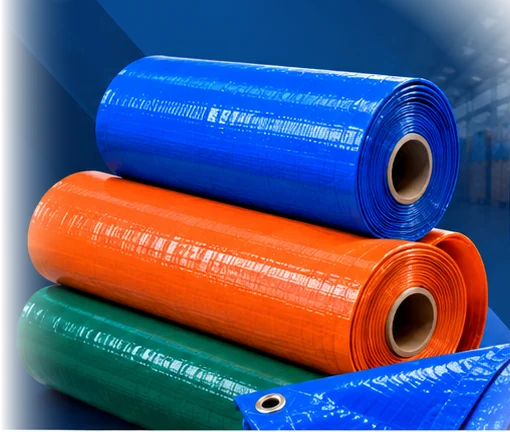
Tarpaulin is not sold at one rate. Two sheets cut to the same size can carry very different prices, because the rate is built up from the material, the weight of the fabric and how much of it you are buying. This page sets out how we arrive at a number, so you can compare quotes properly instead of comparing size alone.
Tarpaulin sheets are quoted by weight, not by piece
Across the Indian market, tarpaulin sheet price is quoted per kilogram of finished fabric. A sheet is priced by multiplying its area by its GSM and then by the rate for that grade. This is why a large, light sheet can cost less than a small, heavy one, and why asking only for a size never produces a firm rate.
Some buyers prefer a per square foot number for budgeting. That is simply the same calculation divided back out over the area, and we are happy to quote it that way.
What GSM does to the price
GSM is grams per square metre, the weight of one square metre of the fabric. It is the single biggest factor in the rate, because you are literally buying more material at a higher GSM. Our range runs from 70 GSM at the light end to 500 GSM for heavy industrial cover.
| GSM band | Typically used for | Effect on rate |
|---|---|---|
| 70 – 120 GSM | Seasonal and short-term cover, single-trip load cover, monsoon protection over a stack | Lowest rate per sheet |
| 120 – 200 GSM | General purpose covering, transport, godown and yard use | Mid range |
| 200 – 300 GSM | Construction and agriculture where the cover stays out for months | Higher rate, longer service life |
| 300 – 500 GSM | Permanent site installation, heavy industrial cover | Highest rate per sheet |
A heavier grade is not automatically the more expensive choice. A 90 GSM sheet replaced three times in a year costs more than one 250 GSM sheet that lasts the year, which is why we ask how long the cover has to stay in service before quoting.
This is why buyers ask for a 120 GSM tarpaulin, a 200 GSM tarpaulin price or a 300 GSM tarpaulin price rather than a price for tarpaulin in general. Quote the GSM and the size together and the number becomes firm.
Price by GSM
Because the rate is built from weight, buyers usually ask for a price against a GSM rather than for tarpaulin in general. These are the weights we are asked for most.
| Weight | What it is bought for | How the rate behaves |
|---|---|---|
| 120 GSM tarpaulin | Seasonal cover, single-trip load cover, monsoon protection over a stack | The lowest rate per sheet in the range |
| 200 GSM tarpaulin price | General purpose covering, transport, godown and yard use | The most asked-for weight, and the usual reference point when comparing quotes |
| 250 GSM tarpaulin | Construction and agriculture where the cover stays out for months | Higher rate, noticeably longer service life |
| 300 GSM tarpaulin price | Heavy site cover and semi-permanent installation | Rate rises roughly with the weight, so expect about half again over 200 GSM |
| 500 GSM and above | Permanent installation and heavy industrial cover | The top of our range; quoted against the specification |
The same GSM in two different builds will not carry the same rate, because lamination on one face or both changes the material used. When you ask for a 200 GSM tarpaulin price, tell us the job as well and we will quote the build that suits it.
Material changes the rate before GSM does
Our plastic tirpal is a plain woven and laminated polyethylene sheet with no reinforcement or heavy hems. HDPE tirpal sits above it, supplied against published GSM, tensile and temperature numbers. Canvas tarpaulin is priced on a different basis again, as cotton canvas behaves differently from polyethylene and is bought for breathability rather than for the lowest rate.
Cut size and finished size are not the same thing
One of the most frequent complaints in this trade is a sheet that arrives smaller than expected. Hemming and eyelet work consume material from the edge, so a sheet cut at one size finishes slightly smaller. When you compare two quotes, check that both are quoting the same one. Our guide to cut size and finished size explains the difference in full.
Common tarpaulin sizes and what they weigh
Because the rate is per kilogram, the useful thing to know about a size is not a fixed price but how much fabric it contains. This table converts the sizes we are asked for most often into area, and into the finished weight at three common GSM bands. Multiply that weight by the per kilogram rate you have been quoted and you have the price of the sheet. Sizes are quoted in feet, so multiply by twelve for inches — a 6 × 10 ft sheet is 72 × 120 inches, and a 12 × 15 ft sheet is 144 × 180 inches.
| Size (ft) | Area (sq ft) | Area (sq m) | 120 GSM | 200 GSM | 300 GSM |
|---|---|---|---|---|---|
| 6 × 3 | 18 | 1.7 | 0.2 kg | 0.3 kg | 0.5 kg |
| 6 × 10 | 60 | 5.6 | 0.7 kg | 1.1 kg | 1.7 kg |
| 9 × 12 | 108 | 10.0 | 1.2 kg | 2.0 kg | 3.0 kg |
| 12 × 12 | 144 | 13.4 | 1.6 kg | 2.7 kg | 4.0 kg |
| 12 × 15 | 180 | 16.7 | 2.0 kg | 3.3 kg | 5.0 kg |
| 20 × 20 | 400 | 37.2 | 4.5 kg | 7.4 kg | 11.1 kg |
| 18 × 24 | 432 | 40.1 | 4.8 kg | 8.0 kg | 12.0 kg |
| 18 × 30 | 540 | 50.2 | 6.0 kg | 10.0 kg | 15.1 kg |
| 20 × 30 | 600 | 55.7 | 6.7 kg | 11.1 kg | 16.7 kg |
| 24 × 30 | 720 | 66.9 | 8.0 kg | 13.4 kg | 20.1 kg |
| 20 × 40 | 800 | 74.3 | 8.9 kg | 14.9 kg | 22.3 kg |
| 30 × 30 | 900 | 83.6 | 10.0 kg | 16.7 kg | 25.1 kg |
| 30 × 40 | 1,200 | 111.5 | 13.4 kg | 22.3 kg | 33.4 kg |
| 40 × 40 | 1,600 | 148.6 | 17.8 kg | 29.7 kg | 44.6 kg |
| 60 × 40 | 2,400 | 223.0 | 26.8 kg | 44.6 kg | 66.9 kg |
Weights are for the finished sheet. Hems, eyelets and rope add a little, and a cut size is larger than the finished size it produces — see the section above. Tell us the size and the job the cover has to do, and we will quote the GSM that suits it.
Quantity
Rates fall in slabs as the order grows, because the same setup, lamination run and dispatch is spread over more material. A single sheet, a hundred sheets and a full truckload are three different numbers. Bulk quantities are held in stock at our Delhi facility for quick dispatch, and regular supply arrangements are quoted separately from one-off orders.
What else moves the number
- Colour. Standard colours cost less than a specified shade.
- Printing. Screen and flexo printing for your own branding is priced on top of the fabric.
- Finishing. Eyelet spacing, rope-reinforced hems and welded joins all add to the sheet.
- Raw material. Polymer prices move, so a rate quoted months ago is not a rate today.
Getting an accurate rate
To quote firmly we need four things: the size, the GSM or the job the cover has to do, the quantity, and where it is going. With those we can give a per kilogram rate and a per piece number for the exact sheet, rather than a range that will change once the specification is fixed.
Every product page carries a bulk price request. Send us the specification through it and we will come back with the rate for that exact sheet.