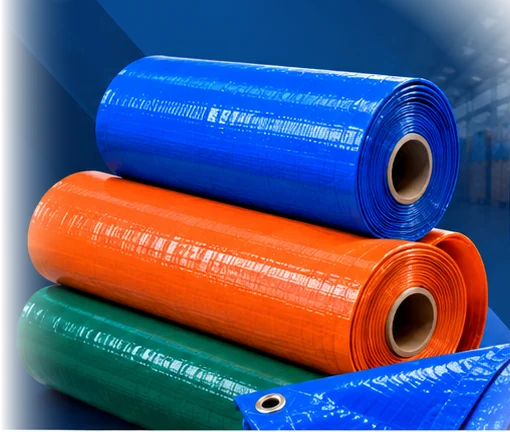
One of the most frequent complaints in this trade is a sheet that arrives smaller than expected. Nine times out of ten nothing is wrong with the tarpaulin — the buyer ordered a cut size and measured a finished size.
The two measurements
Cut size is the dimension of the fabric before it is made up. Finished size is what you can actually measure after the edges are folded, hemmed and reinforced. Hemming typically takes 40 to 75 mm from each edge, so a sheet cut at 18 x 24 feet may finish nearer 17'8" x 23'8".
Neither figure is wrong. The problem is only that different suppliers quote different ones, so you must ask which is which before comparing prices.
How to measure for a cover
Measure the object, then add the drop on every side, then add for tie-down.
- Measure the length and width of the item or area at its widest point
- Add the height you want the sheet to drop on each side, twice
- Add roughly 300 mm for the overlap you will need to tension against
- Round up to the nearest standard size, never down
For a stack 3 m long, 2 m wide and 1.5 m high that you want covered to within half a metre of the ground, you need roughly 3 + 1 + 1 + 0.3 = 5.3 m by 2 + 1 + 1 + 0.3 = 4.3 m.
Eyelet spacing matters too
Standard spacing is usually every 1 metre or every 3 feet along the hem. Closer spacing spreads rope tension across more points and is worth specifying for anything exposed to wind. Corner eyelets should always be reinforced — that is where sheets tear first.
When to go custom
Standard sizes are cheaper and available immediately, so use them where you can. Order a custom size when the standard nearest up would waste more than about 15 per cent of the material, when the sheet must fit a fixed frame, or when you need non-standard eyelet positions. For repeat requirements, a custom size usually pays for itself within two orders.
Send us the dimensions of what you are covering rather than the size you think you need — we will work the sizing back for you and confirm cut and finished dimensions in writing.