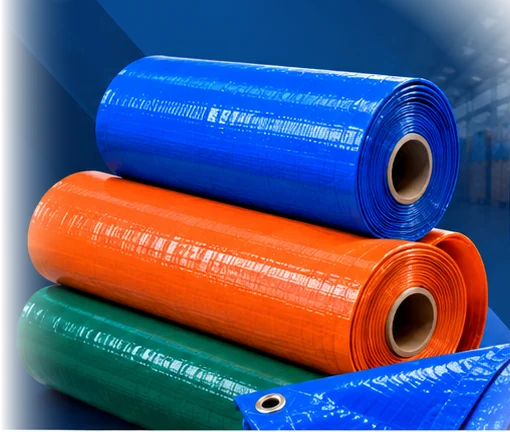
A tarpaulin almost never tears in the middle. It fails at the edge — at an eyelet that pulled through, or along a hem that frayed — which is why the finishing matters as much as the GSM you paid for.
What the hem is doing
The hem is the folded and welded border running round the sheet. It does two jobs: it stops the cut edge unravelling, and it doubles the material exactly where the load is applied. A sheet with no hem will start to fray from the cut edge within a season of being tied and untied.
Because the hem is a fold, it also takes the finished size slightly inside the cut size — the point covered in cut size versus finished size.
Eyelet spacing matters more than eyelet count
Buyers tend to ask how many eyelets a sheet has. The more useful question is how far apart they are, because that is what decides the load on each one.
Closer spacing shares the pull between more points, so no single eyelet carries enough force to tear through. Widely spaced eyelets concentrate the load, and in wind the sheet starts to flap between tie points, which works the fabric until it splits. For a sheet that will sit in wind — a truck cover, a site enclosure, anything on a roof — closer spacing is worth more than heavier material with fewer points.
Corners take the most load of any point on the sheet and should always have an eyelet.
What rope in the hem does
A rope run through the hem spreads tension along the whole edge instead of letting it gather at each eyelet. The eyelets then hold the rope rather than the fabric, and the fabric is pulled evenly.
It is the single most effective way to extend the life of a sheet that gets tied tight and left in weather, and it is why rope-hemmed covers outlast plain-hemmed ones on the same material.
How to tie it without damaging the sheet
- Pull against the hem, not against a single eyelet.
- Leave a little slack — a drum-tight sheet has nowhere to go when the wind lifts it.
- Use a bungee or elastic tie where the load changes, so the shock is absorbed rather than passed to the eyelet.
- Do not thread rope through a tear "just for now". It becomes permanent and the tear grows.
What to specify when ordering
- Finished size, not cut size.
- Eyelet spacing, not eyelet count.
- Whether you want rope in the hem.
- Which edges take the load, if the sheet is for one fixed position.
New Vision Tarpaulin cuts and finishes sheets to order at its Delhi works, with eyelets and rope to the spacing a job needs. Tell us the size and what the cover has to do, and we will suggest the finishing.