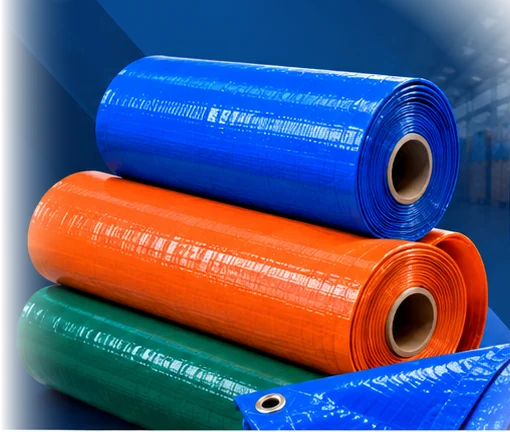
Every tarpaulin we make is waterproof, not water resistant, and the difference is not marketing. A water resistant fabric slows water down. A waterproof sheet stops it. If a cover is going over stock, a load or a site, only the second one is any use.
A waterproof tarp and a waterproof tarpaulin are the same thing — tarp is simply the short form, and heavy duty tarps, plastic tarps and truck tarps all refer to grades we make.
What makes a sheet waterproof
Our sheets start as high-density polyethylene tape woven into a base fabric. On its own that weave has gaps, and water will find them under pressure or over time. Lamination closes them: a polyethylene film is bonded over the woven base, on one or both faces depending on the grade, so there is no path through the material at all.
That is why a laminated sheet sheds rain and dust instead of soaking it up, and why the surface stays dry underneath rather than wicking moisture through. Canvas works on a completely different principle, and we cover that below.
Why waterproof covers still leak
In our experience almost no failure is the lamination giving way. The usual causes are:
- The wrong size. A sheet that does not reach far enough lets water run in at the edge. This is the single most common cause.
- Loose tying. Water pools in the slack, the weight stretches the sheet, and the pool grows until it finds an eyelet.
- Tear-out at the corners. Tie-down load concentrated on one eyelet rips the hem. Our sheets set eyelets at standard spacing to spread that load along the hem.
- UV damage. A sheet left in strong sun for a season goes brittle and then splits at the first heavy shower. This is a grade problem, not a waterproofing problem.
Which waterproof grade to choose
All our polyethylene grades are waterproof. What separates them is how long they stay that way under load and sun.
| Grade | Build | Suits |
|---|---|---|
| Plastic tirpal | Woven and laminated, no reinforcement | Seasonal and short-term cover, single-trip loads |
| Tarpaulin sheets | Multi-layer laminated, hemmed and eyeletted | General industrial, transport and site cover |
| Heavy duty tarpaulin | Reinforced, laminated both faces | Months of continuous exposure, permanent installation |
| HDPE tirpal | Specification grades, 70–500 GSM, UV stabilised | Tender and drawing purchases with stated numbers |
For anything staying out through a full monsoon and the sun either side of it, UV stabilisation matters as much as the lamination. That is where heavy duty waterproof tarpaulin earns its higher rate.
When you do not want a waterproof sheet
Waterproof is not always right. Sealing damp goods under a non-breathable sheet traps the moisture with them: condensation collects on the underside and drips back onto the stock. For grain, produce, and machinery going into storage still carrying moisture, canvas tarpaulin is the better answer because it breathes. We would rather tell you that than sell you the wrong cover.
Sizes, colours and rates
Waterproof sheets are cut to order in any width and length, with hemmed edges and eyelets at the spacing you need, in standard colours or a specified shade. Rates are quoted per kilogram of finished fabric and move with the grade, the GSM and the quantity — how the price is worked out explains what changes the figure.