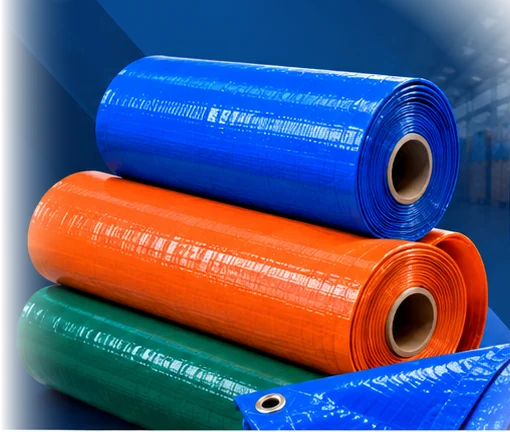
A tarpaulin usually fails long before the material is worn out. It fails because it was folded wet, stored on a damp floor, or left with a small tear that grew. A few habits will comfortably double the life of the same sheet.
Cleaning
Rinse with plain water and a soft brush. Mild soap is fine for stubborn dirt. Avoid detergents with bleach, solvents, and pressure washers — all three attack the lamination, and a pressure washer can drive water straight through the weave at the seams.
Drying
This is the step that matters most. Dry the sheet completely on both sides before it is folded, in shade rather than direct sun where possible. Prolonged direct sun on a wet sheet accelerates UV damage. On canvas, folding while damp guarantees mildew.
Folding and storage
- Fold loosely rather than tightly — sharp creases crack the coating
- Vary the fold lines between uses so the same points are not stressed every time
- Store off the floor, on a shelf or pallet, away from direct sunlight
- Keep sheets away from oil, fuel and sharp tools
- Do not store rolled around a sharp edge or hung over a nail
Repairing small damage
A tear under about 50 mm can be patched and will hold for the rest of the sheet's life. Clean and dry the area, cut a patch that extends at least 50 mm beyond the damage in every direction, round the corners of the patch so it cannot peel, and apply to both faces. Round corners matter more than most people expect — a square patch lifts at the corner and the repair fails.
Damage along a hem, at an eyelet, or longer than about 150 mm is worth having repaired properly rather than patching in the field.
Before the rains
Open every stored sheet at the start of the season and check it flat. Finding a cracked fold line in a yard is inconvenient. Finding it on a covered load in heavy rain is expensive.