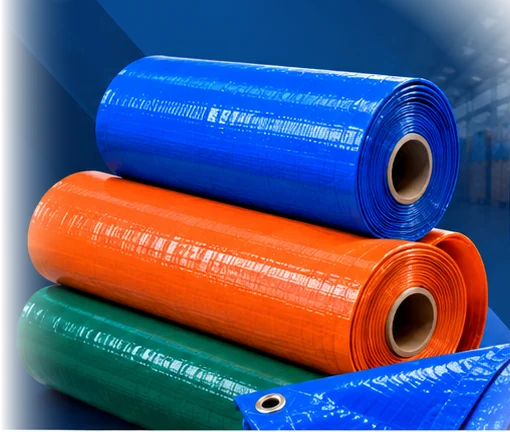
Almost every enquiry we receive comes down to the same fork in the road: a laminated HDPE sheet or a traditional cotton canvas one. Both are genuinely useful, and the right answer depends far more on the application than on the price list.
HDPE laminated tarpaulin
HDPE tarpaulin is woven from high-density polyethylene tape yarn and then laminated on both faces. The result is fully waterproof, light enough for one person to handle, and unaffected by rot or mildew. It is the default choice for covering goods, stock and vehicles.
- Completely waterproof rather than merely water resistant
- Light, so large sizes stay manageable
- Does not absorb water, so it will not gain weight in rain
- Available in a wide range of GSM and colours
- Lower cost per square metre
Canvas tarpaulin
Canvas is woven cotton, usually treated for water resistance. It breathes, which is the property that makes it worth the extra cost in specific situations.
- Allows moisture vapour to escape, so condensation does not collect underneath
- Tolerates heat and sparks far better — the practical choice near welding or hot work
- Heavier and more abrasion resistant against rough edges
- Does not rattle in wind the way a plastic sheet does
Choosing between them
Use HDPE when the priority is keeping water out: covering cement, grain bags, machinery on a yard, truck loads, or building a temporary shed roof. Use canvas when the covered item needs to breathe or when heat is involved: covering equipment that will sit for months, protecting a workshop area, or anywhere sparks may land.
The condensation trap
This is worth spelling out because it catches people every year. If you seal a warm or damp item under a fully waterproof sheet, moisture that is already inside cannot escape. It condenses on the underside of the tarpaulin and drips back down. The item stays wet even though no rain reached it. If you must use HDPE in that situation, leave an air gap and do not seal the sheet all the way to the ground.
If your application sits somewhere between the two, tell us what you are covering and for how long. We stock both and will say plainly which one we would use.