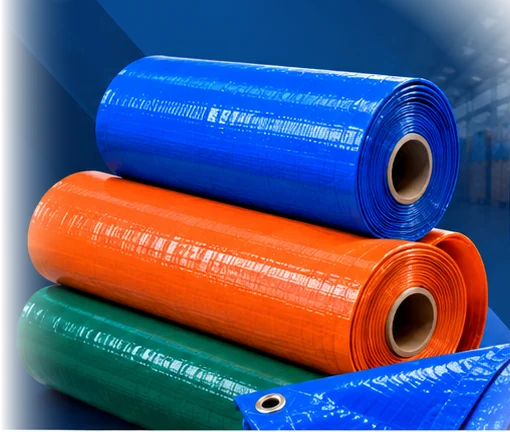
A fumigation cover has a job that an ordinary tarpaulin does not: it has to hold a gas concentration at a specified level for the full exposure period. If the concentration drops, the treatment fails, and a failed treatment on export cargo means delay, re-treatment cost and sometimes rejection at destination.
What makes a cover suitable
- Low gas permeability. The sheet must retain the fumigant, not merely keep rain out. This is a property of the film and the lamination, not of the weave alone.
- Sealed seams. Stitched seams leak. Fumigation covers are heat sealed or welded so the join is as gas-tight as the sheet.
- Adequate weight. Typically 200 to 400 GSM depending on stack size and how often the sheet will be reused.
- Generous size. The sheet must reach the floor on every side with enough spare to form a sand snake seal or to be weighted down properly.
- Chemical resistance. The material must not be degraded by the fumigant over repeated cycles.
Sizing the cover
Measure the stack, then add the full height twice plus at least one metre on each dimension for the ground seal. Under-sizing is the single most common cause of a failed treatment: a cover that only just reaches the floor cannot be sealed reliably, and every gap costs concentration.
Using it well
Inspect for pinholes before every use by holding the sheet against light. Seal the perimeter continuously with sand snakes or water tubes rather than at intervals. Avoid dragging the sheet across a concrete floor, and keep it clear of pallet corners and strapping ends when lowering it over a stack.
Between treatments
Clean, dry and fold loosely, and store flat and off the ground. Record the number of cycles each sheet has completed. Most covers are retired on cycle count rather than on visible wear, because permeability rises before damage becomes obvious.
We supply fumigation covers to size with sealed seams. Send us your stack dimensions and the treatment you are running and we will specify the sheet, including the ground allowance.